


Laser Marking & Engraving Machines
Laser marking and engraving technologies offer precise and permanent high-speed laser solutions for marking various materials including stainless steel, titanium, anodised aluminium, brass, and copper. A laser marking machine utilises advanced laser technology to imprint enduring marks, designs, or patterns onto diverse surfaces with exceptional speed and accuracy.
Widely employed across industrial and manufacturing sectors, laser marking ensures permanent, non-contact markings without compromising the material integrity. If you don’t see something you’re looking for, contact us on +44 114 2766044.
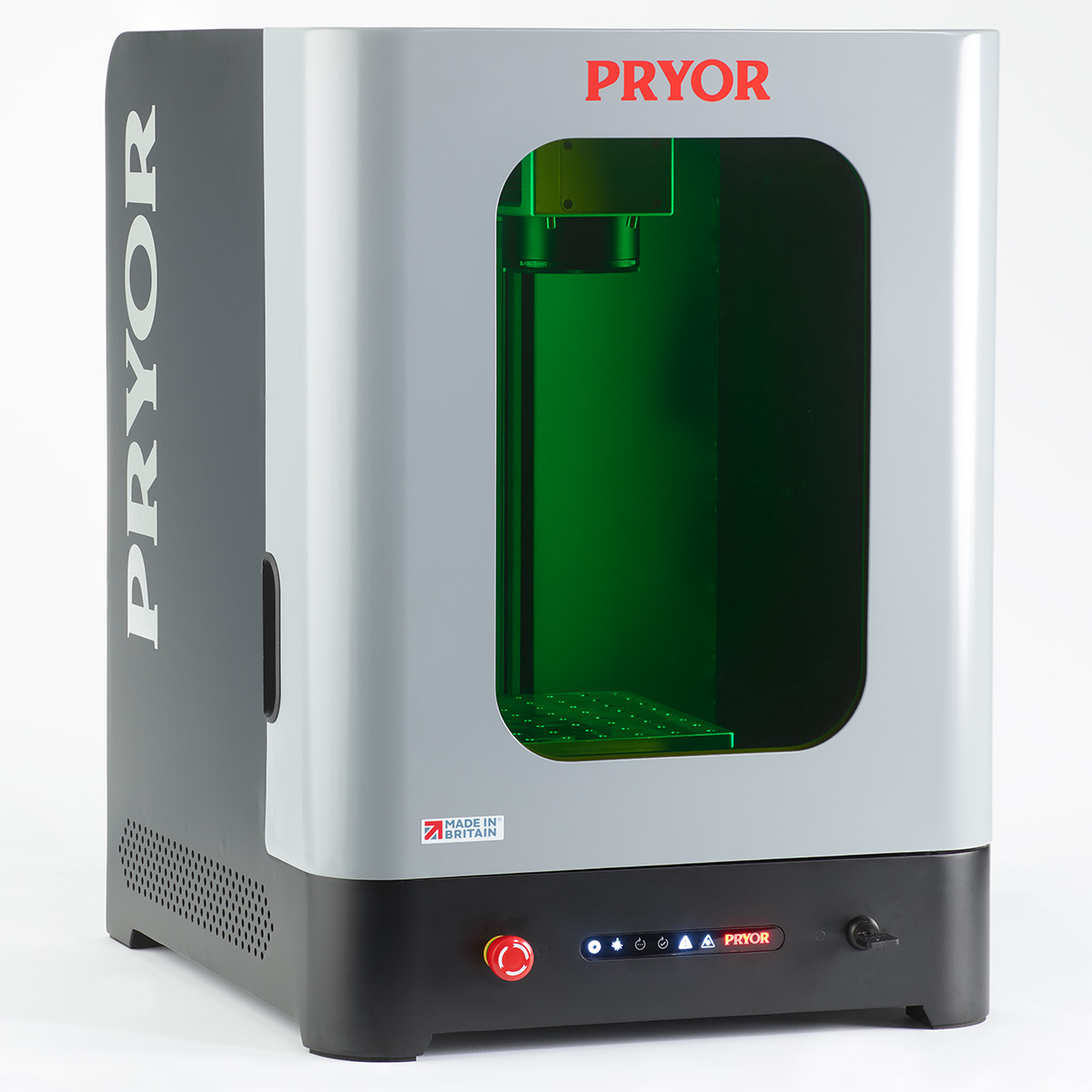
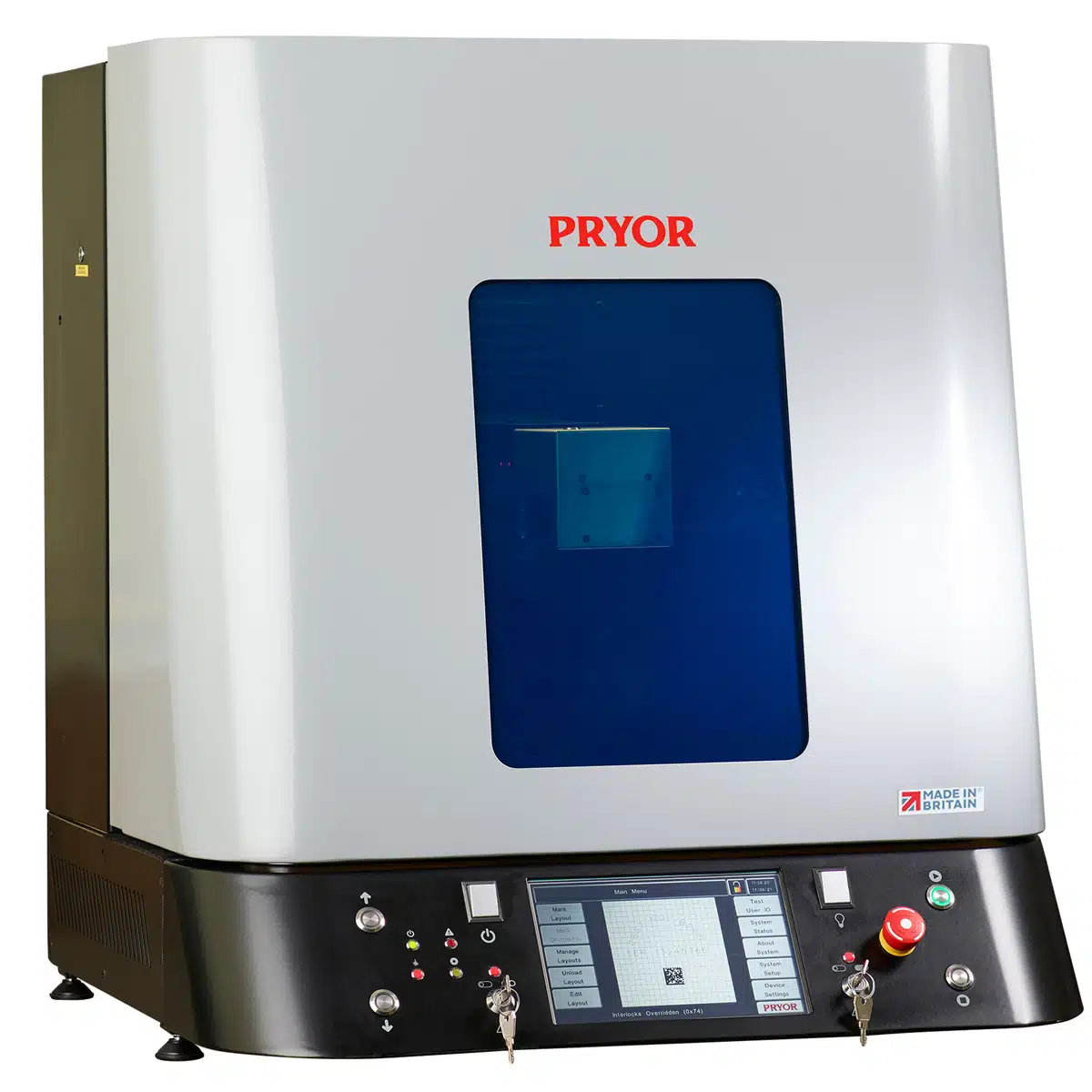
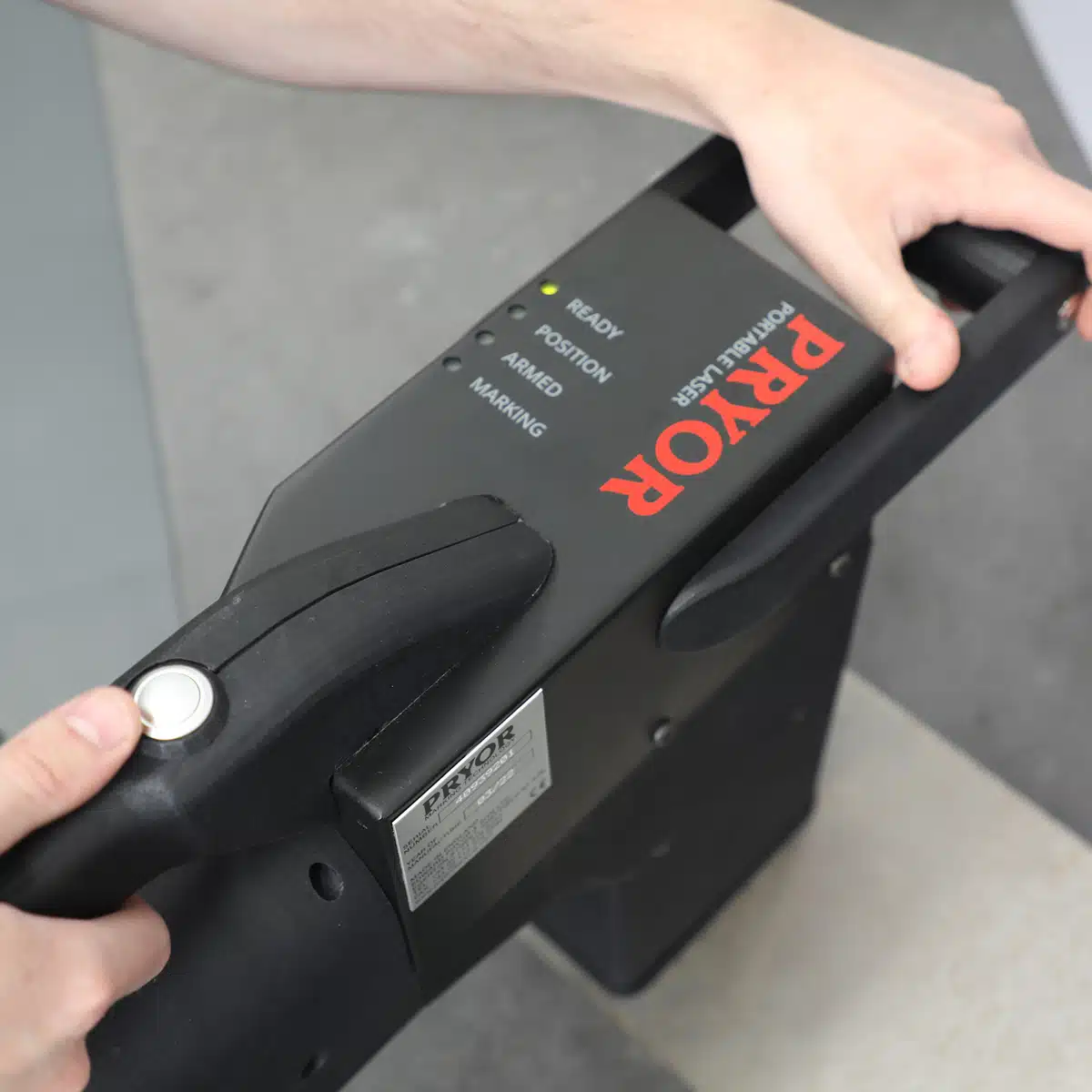
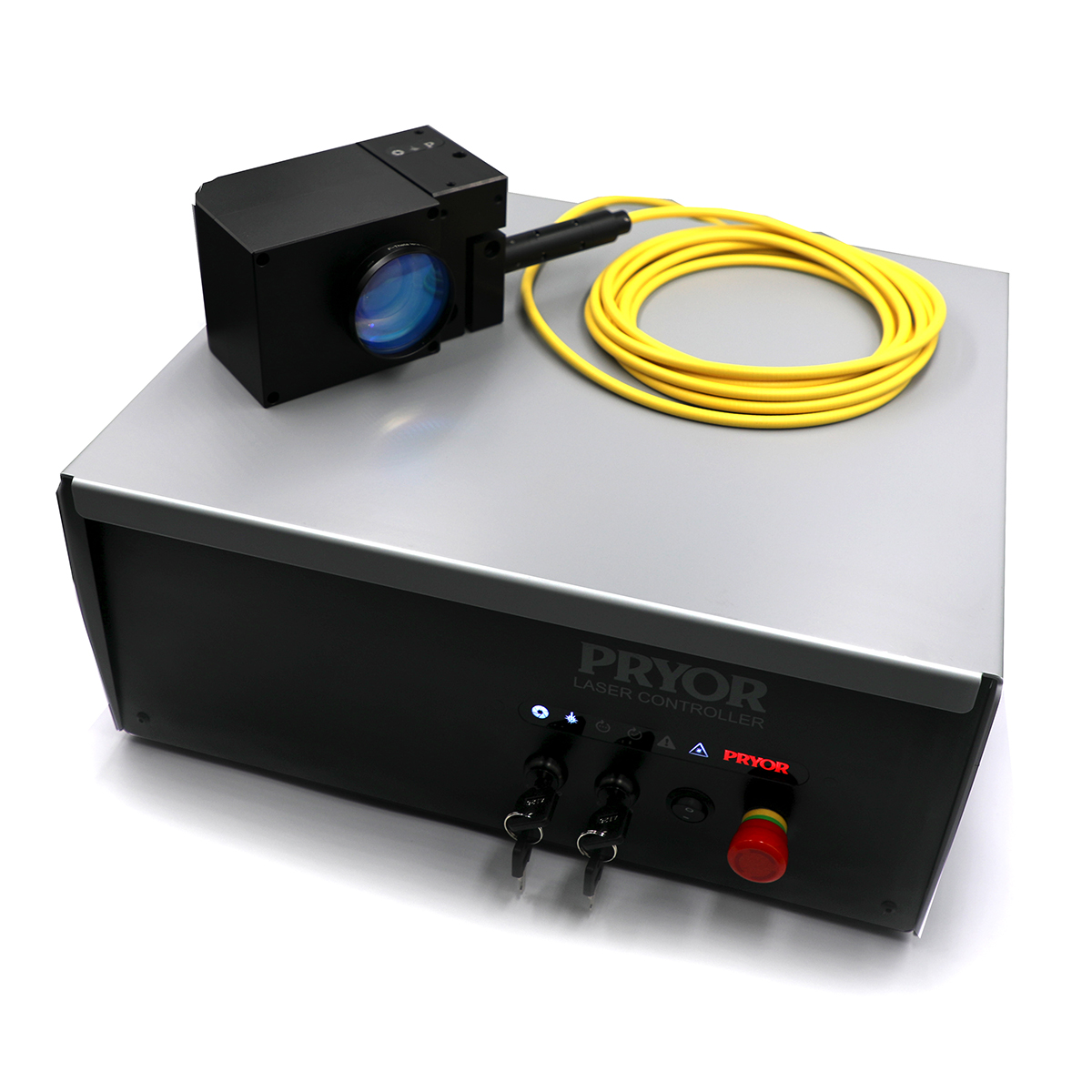
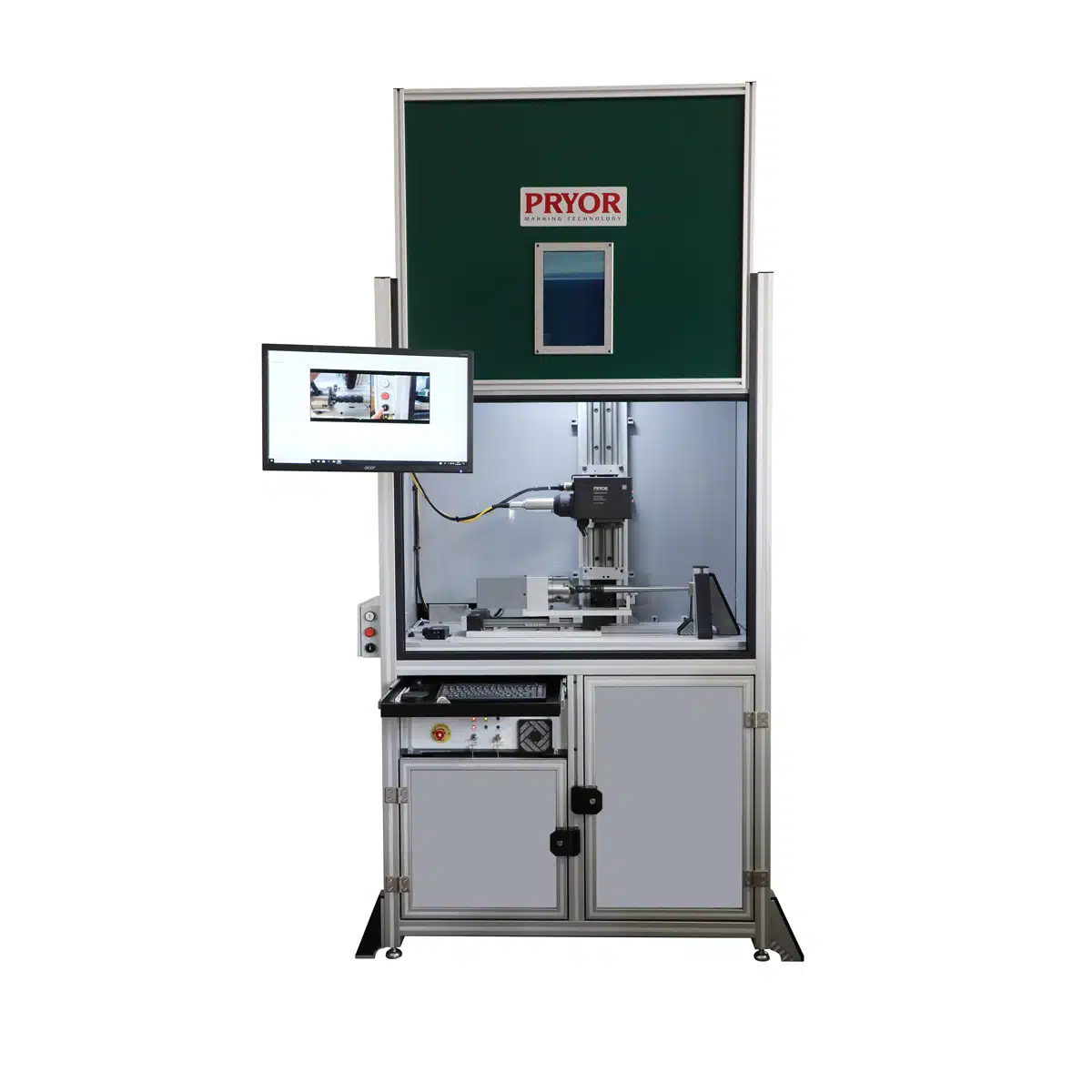
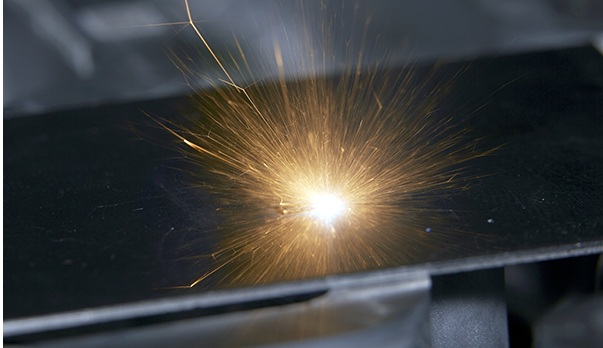
By selectively altering surface properties using a focused laser beam, this cutting-edge process delivers clean, durable, and highly legible markings suitable for a wide range of applications. Whether for product identification, branding, or traceability, laser marking and engraving provide unmatched versatility and reliability in direct part marking solutions.
Pryor recognised the benefits a high-speed Laser could bring to marking very early in its evolution, and we have been building laser engraving machines and marking machines in Sheffield, UK ever since.
Choosing the perfect Laser marker for your business
Desktop / Benchtop Lasers
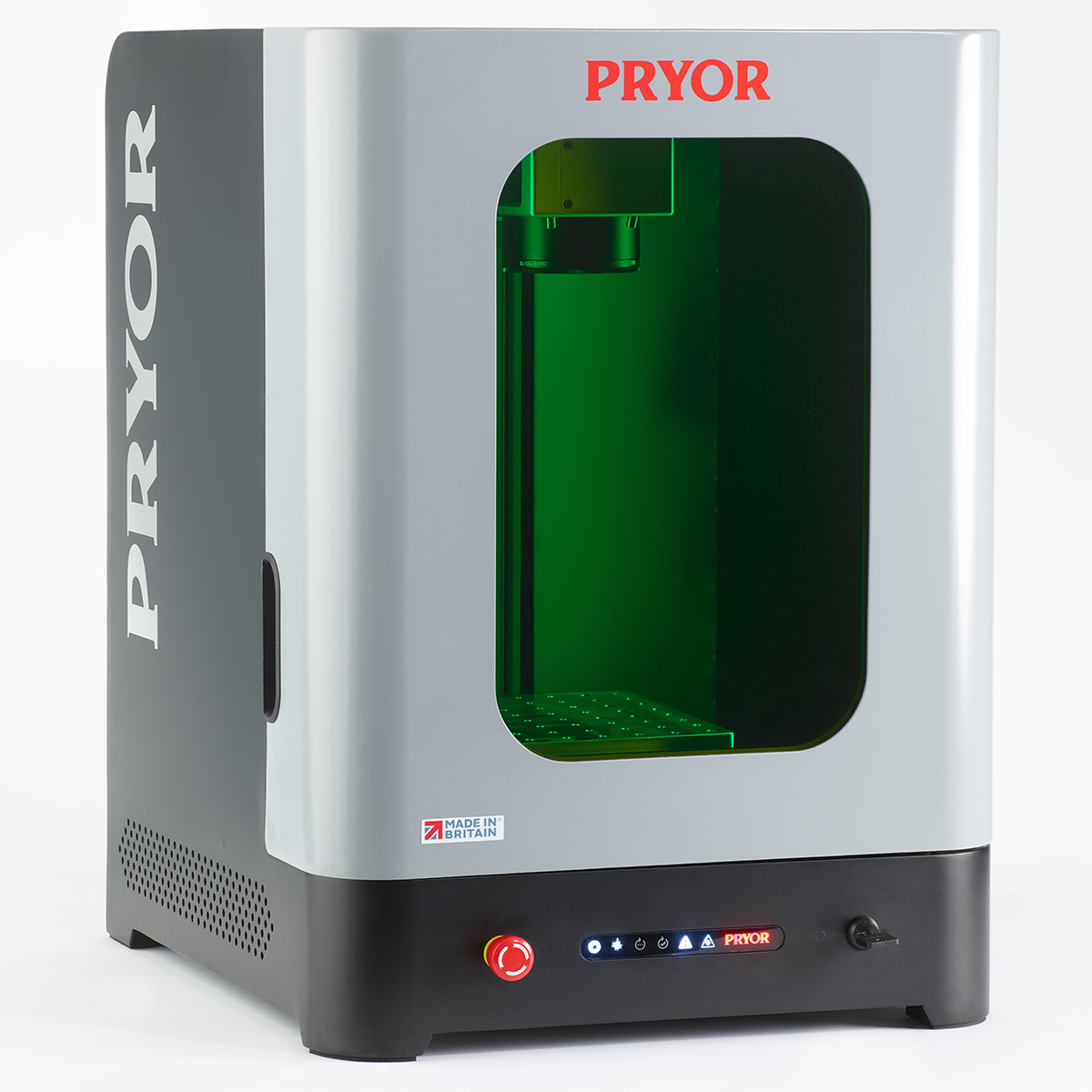
Benchtop laser markers are compact, enclosed systems built for precision marking at a workstation. They suit small to medium components and controlled environments. Simple to run and quick to set up, they’re a reliable choice for workshops that need consistent, high-quality marks without taking up much floor space. Desktop Laser markers are their smaller brethren
Workstation Lasers
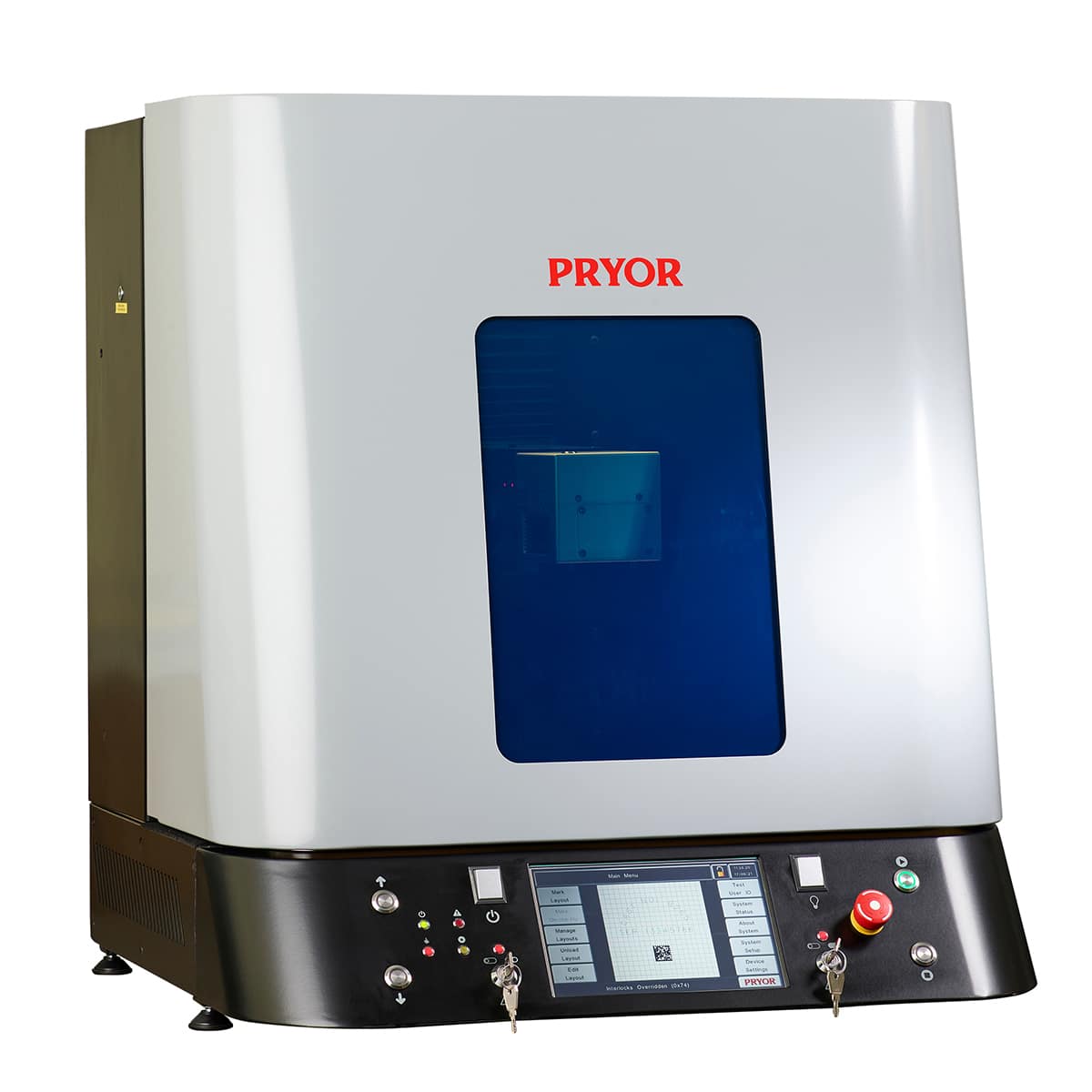
Workstation laser systems provide a larger, enclosed marking area with greater flexibility. They’re designed for industrial use, handling a wider range of parts and batch sizes. Adjustable fixtures, safety enclosures, and powerful lasers make them well suited to production environments where repeatability and operator safety matter.
Portable Lasers
Portable laser markers bring flexibility to the job. Instead of moving heavy parts to a machine, the laser comes to the workpiece. They’re ideal for marking large, fixed, or awkward components such as castings, structures, or assembled equipment, while still delivering safe, accurate and permanent laser marks.
Integrator Lasers
Integrator laser systems are designed to be built directly into production lines or automated cells. Supplied as marking heads with separate controllers, they offer full integration flexibility. These systems allow manufacturers to mark parts in-line, often on the move, without interrupting the production process.
Benefits of Laser Engraving
At Pryor, we focus on fibre and MOPA laser marking technology because it delivers the speed, precision, and reliability modern manufacturing demands. These systems are built for permanent product identification, traceability, and high-quality surface marking across a wide range of industrial materials.
Here are some of the key advantages.
Speed & Throughput
Fibre and MOPA lasers are designed for high-speed production environments where time matters. High marking speeds allow parts to be processed quickly, whether in a batch workstation or directly on a production line.
That efficiency keeps throughput high and helps manufacturers maintain productivity without slowing other operations.
Precision & Mark Quality
Laser marking offers exceptional precision and repeatability. Fine details, serial numbers, logos, and Data Matrix codes can be marked clearly and consistently.
This level of accuracy is essential in industries such as aerospace, automotive, electronics, and medical manufacturing, where traceability and legibility are critical.
Material Capability
Fibre and MOPA lasers are particularly well suited to marking metals and many engineering plastics.
MOPA technology adds extra flexibility, allowing greater control over pulse duration and energy. That means better results on delicate plastics, deeper engraving where required, or high-contrast marks on materials like stainless steel.
Permanent & Durable Marks
Laser marking produces a permanent mark that becomes part of the material surface. Unlike labels or inks, it won’t fade, peel, or wear away with time.
This durability makes laser marking ideal for components that must remain identifiable throughout their working life.
Non-Contact Process
Laser marking is completely non-contact. There is no mechanical force on the part and no tooling to wear out.
That reduces the risk of distortion or damage, especially when marking delicate components or finished surfaces.
Contact our team today
Low Maintenance & High Reliability
Fibre and MOPA laser sources are known for long operational life and minimal maintenance requirements. With very few moving parts, they offer dependable performance and reduced downtime.
For manufacturers, that means a lower total cost of ownership over the lifetime of the system.
Automation & Integration
Laser marking systems can operate as standalone workstations or be integrated directly into automated production lines.
Integrator lasers make it possible to mark components in-line, sometimes even on the move, supporting modern automated manufacturing processes.
Clean & Efficient Process
Laser marking produces very little waste and requires no inks, chemicals, or consumables.
The process is clean, efficient, and well suited to controlled manufacturing environments where consistency and process reliability are important.
Flexible Marking Control
With MOPA technology in particular, users gain a high degree of control over how the mark is produced. Parameters can be adjusted to create deep engraving, annealed marks, high-contrast surface marks, or delicate plastic marking.
This flexibility allows a single laser system to support multiple products and marking requirements.
In short, fibre and MOPA laser marking systems provide a fast, precise, and permanent method of marking industrial components. From standalone workstations to fully integrated production systems, they form a reliable backbone for modern product identification and traceability.
Why Pryor Laser Marking Machines?
At Pryor, our laser marking systems are designed and built in Britain, right here in Sheffield. It’s a city shaped by engineering, precision, and metalworking, so it’s the natural home for our technology.
Manufacturing locally means we stay close to the process. Our engineers design, assemble, and test each fibre and MOPA laser system under one roof. That gives us tight quality control and the freedom to tailor solutions when customers need something specific.
For our customers, it also means shorter lead times, dependable support, and technology backed by more than a 175 years of marking expertise.
Frequently Asked Questions (FAQs)
Pryor Laser Marking machines are controlled using Pryor’s own traceability software called MarkMaster. MarkMaster has been developed over a number of years by Pryor’s in-house team of software developers. Our standard traceability software is a comprehensive, powerful application. MarkMaster started as a fairly simple program to run our marking machines via a Windows interface, but we quickly realised that combined with a marking machine it was capable of so much more. Today our software is used to tie together the different aspects of the marking process and, increasingly important, to integrate the marking equipment into a manufacturing execution system (MES).
We are proud to be a member of Made In Britain and all of our marking machines, including laser engravers are made at our Sheffield HQ. Because we build our machines inhouse our lead times are often much shorter than when laser have to be shipped from outside the UK.
Pryor Laser Markers are available direct from our Sheffield, UK Head Quarters. Any website enquiries are delivered to our dedicated sales team to help you with your enquiry. We also have Subsidiaries in the USA and France and a range of Partners in many countries around the world. Our range of laser products can be found above.
The combination of precision, speed, versatility, and durability makes fiber lasers an excellent choice for both laser engraving and laser marking applications across diverse materials and industries. Their advanced technology has contributed to their widespread adoption in modern manufacturing and production processes.
In essence, the primary difference lies in the depth of material modification. Laser engraving involves physically removing material to create noticeable depth, making it suitable for decorative and detailed applications. On the other hand, laser marking modifies the surface without significant material removal, making it ideal for identification, traceability, and applications where a subtle mark is preferred. Both processes leverage the precision and versatility of laser technology to achieve their respective outcomes.
Laser marking is highly accurate, offering precision down to micrometers. The focused laser beam enables intricate designs, small characters, and detailed markings with minimal margin of error, making it ideal for applications requiring high precision.
Yes, laser marking is well-suited for high-volume production. Its non-contact, fast processing, and consistent results make it an efficient choice for industries with large-scale manufacturing needs, contributing to increased productivity.
Absolutely, laser markers can be seamlessly integrated into automated production lines. Their computer-controlled precision, rapid processing, and reliability make them well-suited for integration, enhancing overall efficiency in manufacturing processes. Pryor have integrated machines across a wide range of manufacturing production lines including some of the biggest companies in the Automotive and Aerospace sectors
We use a Fiber Laser which is suitable for marking a range of surfaces.
Laser marking is a rapid process, with speeds depending on the complexity and size of the marking. It can achieve high-speed marking, making it efficient for applications where speed is crucial to meet production demands.
Yes, laser markers can handle curved or irregular surfaces. The flexibility of laser systems, including the use of scanning heads, allows for accurate marking on three-dimensional and non-flat surfaces, enhancing versatility in various manufacturing applications. Pryor offer a number of fixtures which interface with our Software, Traceability IT to work in conjunction with out Laser Marking Machines.
Laser marking can mark a wide range of information, including serial numbers, barcodes, logos, alphanumeric characters, and 2D codes. It's adaptable to various materials, allowing for versatile applications in product identification and traceability.
The cost considerations for implementing laser marking technology include initial equipment costs, maintenance expenses, and training. While the upfront investment may be higher, the long-term benefits, such as reduced consumable costs and increased efficiency, often justify the expenditure for businesses focused on precision and high-volume production.
Laser engraving on metal is permanent because the material is vaporised away, this changes the features of the surface. The marks are resistant to fading, scratching, and wear.
A laser engraving machine operates by emitting a highly focused beam of light onto the surface of a material, causing it to vaporize and create permanent markings. The laser beam precisely removes layers of the material, acting as a virtual chisel to etch intricate designs or text. By targeting localized areas with concentrated energy, the laser generates intense heat, which vaporizes the material and leaves behind precise, high-quality engravings. This process offers exceptional precision and versatility, making laser engraving ideal for a wide range of applications, from personalizing gifts to industrial manufacturing.
Anodised, including colour-anodised, aluminium is well suited to engraving with a Pryor Fibre Laser. The anodised surface responds exceptionally well to the laser process, enabling markings of near-photographic quality.